
The first SPOTLab publications coming soon!
In the meantime have a look at other IR spectroscopy and nanocharacterization publications from our team members.
2025
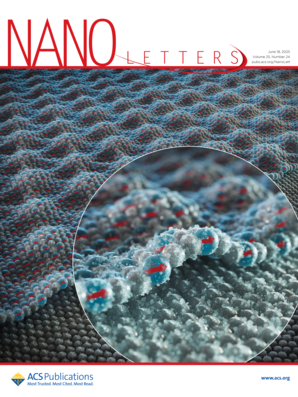
Przychodnia, Marta; Bazarnik, Maciej
Ferromagnetism in Two-Dimensional Dysprosium−Platinum Surface Alloy Journal Article
In: Nano Letters, vol. 25, iss. 24, pp. 9519, 2025.
@article{Przychodnia_NL_2025,

title = {Ferromagnetism in Two-Dimensional Dysprosium−Platinum Surface Alloy},

author = {Marta Przychodnia and Maciej Bazarnik},

doi = {10.1021/acs.nanolett.5c00262},

year  = {2025},

date = {2025-05-17},

urldate = {2025-05-17},

journal = {Nano Letters},

volume = {25},

issue = {24},

pages = {9519},

abstract = {In this study, we comprehensively analyze single and triplelayers of a new two-dimensional surface alloy, namely DyPt2. Both areferromagnetic materials with an in-plane easy magnetization axis and lowCurie temperature on the order of a few Kelvins. Magnetic and electronicproperties confirm weak interlayer coupling and the dominance ofinteractions within alloy layers. Atomic-scale investigation proved nearlythe same atomic structure of the termination layer and varying moirépatterns. The electronic structures of single and triple layer DyPt2 are similar,consisting of a mixture of Dy and Pt electronic states. The intensity of theseelectronic states varies within the moiré pattern, similar to the surface localwork function, demonstrating modulated coupling between the surface alloyand the substrate. The presented results provide essential knowledge for further research of this system in terms of its application inthe growth of densely packed arrays of magnetic clusters and molecules.


Funding from the Ministry of Education and Science (Poland), Project No. 0512/SBAD/2520

Funding from the National Science Centre (Poland) Project No. 2019/33/N/ST5/01711 },

keywords = {},

pubstate = {published},

tppubtype = {article}

}
Funding from the Ministry of Education and Science (Poland), Project No. 0512/SBAD/2520
Funding from the National Science Centre (Poland) Project No. 2019/33/N/ST5/01711
2024

Orlikowska-Rzeznik, Hanna; Versluis, Jan; Bakker, Huib J.; Piatkowski, Lukasz
Cholesterol Changes Interfacial Water Alignment in Model Cell Membranes Journal Article
In: Journal of the American Chemical Society, vol. 146, iss. 19, pp. 13151–13162, 2024.
@article{Orlikowska_JACS_2024,

title = {Cholesterol Changes Interfacial Water Alignment in Model Cell Membranes},

author = {Hanna Orlikowska-Rzeznik and Jan Versluis and Huib J. Bakker and Lukasz Piatkowski},

doi = {10.1021/jacs.4c00474},

year  = {2024},

date = {2024-04-30},

urldate = {2024-04-30},

journal = {Journal of the American Chemical Society},

volume = {146},

issue = {19},

pages = {13151–13162},

abstract = {The nanoscopic layer of water that directly hydrates biological membranes plays a critical role in maintaining the cell structure, regulating biochemical processes, and managing intermolecular interactions at the membrane interface. Therefore, comprehending the membrane structure, including its hydration, is essential for understanding the chemistry of life. While cholesterol is a fundamental lipid molecule in mammalian cells, influencing both the structure and dynamics of cell membranes, its impact on the structure of interfacial water has remained unknown. We used surface-specific vibrational sum-frequency generation spectroscopy to study the effect of cholesterol on the structure and hydration of monolayers of the lipids 1,2-dipalmitoyl-sn-glycero-3-phosphocholine (DPPC), 1,2-dioleoyl-sn-glycero-3-phosphocholine (DOPC), and egg sphingomyelin (SM). We found that for the unsaturated lipid DOPC, cholesterol intercalates in the membrane without significantly changing the orientation of the lipid tails and the orientation of the water molecules hydrating the headgroups of DOPC. In contrast, for the saturated lipids DPPC and SM, the addition of cholesterol leads to clearly enhanced packing and ordering of the hydrophobic tails. It is also observed that the orientation of the water hydrating the lipid headgroups is enhanced upon the addition of cholesterol. These results are important because the orientation of interfacial water molecules influences the cell membranes’ dipole potential and the strength and specificity of interactions between cell membranes and peripheral proteins and other biomolecules. The lipid nature-dependent role of cholesterol in altering the arrangement of interfacial water molecules offers a fresh perspective on domain-selective cellular processes, such as protein binding.},

keywords = {},

pubstate = {published},

tppubtype = {article}

}
2023
Krok, Emilia; Franquelim, Henri G.; Chattopadhyay, Madhurima; Orlikowska, Hanna; Schwille, Petra; Piatkowski, Lukasz
Nanoscale structural response of biomimetic cell membranes to controlled dehydration Journal Article
In: Nanoscale, vol. 16, pp. 72-84, 2023.
@article{Krok_Nanoscale_2024,

title = {Nanoscale structural response of biomimetic cell membranes to controlled dehydration},

author = {Emilia Krok and Henri G. Franquelim and Madhurima Chattopadhyay and Hanna Orlikowska and Petra Schwille and Lukasz Piatkowski},

doi = {10.1039/D3NR03078D},

year  = {2023},

date = {2023-12-08},

urldate = {2023-12-08},

journal = {Nanoscale},

volume = {16},

pages = {72-84},

abstract = {Although cell membranes exist in excess of water under physiological conditions, there are a number of biochemical processes, such as adsorption of biomacromolecules or membrane fusion events, that require partial or even complete transient dehydration of lipid membranes. Even though the dehydration process is crucial for understanding all fusion events, still little is known about the structural adaptation of lipid membranes when their interfacial hydration layer is perturbed. Here, we present the study of the nanoscale structural reorganization of phase-separated, supported lipid bilayers (SLBs) under a wide range of hydration conditions. Model lipid membranes were characterised using a combination of fluorescence microscopy and atomic force microscopy and, crucially, without applying any chemical or physical modifications that have previously been considered essential for maintaining the membrane integrity upon dehydration. We revealed that decreasing the hydration state of the membrane leads to an enhanced mixing of lipids characteristic of the liquid-disordered (Ld) phase with those forming the liquid-ordered (Lo) phase. This is associated with a 2-fold decrease in the hydrophobic mismatch between the Ld and Lo lipid phases and a 3-fold decrease in the line tension for the fully desiccated membrane. Importantly, the observed changes in the hydrophobic mismatch, line tension, and lipid miscibility are fully reversible upon subsequent rehydration of the membrane. These findings provide a deeper insight into the fundamental processes, such as cell–cell fusion, that require partial dehydration at the interface of two membranes.},

keywords = {},

pubstate = {published},

tppubtype = {article}

}
2022

Przychodnia, Marta; Hermanowicz, Michał; Sierda, Emil; Elsebach, Micha; Grzela, Tomasz; Wiesendanger, Roland; Bazarnik, Maciej
Controlled growth of Gd-Pt surface alloys on Pt (111) Journal Article
In: Physical Review B – Condensed Matter and Materials Physics, vol. 105, no. 3, pp. 035416, 2022.
@article{Przychodnia2022,

title = {Controlled growth of Gd-Pt surface alloys on Pt (111)},

author = {Marta Przychodnia and Michał Hermanowicz and Emil Sierda and Micha Elsebach and Tomasz Grzela and Roland Wiesendanger and Maciej Bazarnik},

doi = {10.1103/PhysRevB.105.035416},

year  = {2022},

date = {2022-01-01},

urldate = {2022-01-01},

journal = {Physical Review B - Condensed Matter and Materials Physics},

volume = {105},

number = {3},

pages = {035416},

publisher = {American Physical Society},

abstract = {In this paper, we are reporting on the structural and electronic properties of Gd-Pt surface alloys grown on a Pt(111) substrate. Using scanning tunneling microscopy and spectroscopy combined with density functional theory calculations, we are exploring differences between three different surface alloys, identified as single-layer GdPt2, single-layer GdPt5, and double-layer GdPt5. We show that an appropriate choice of substrate temperature as well as surface coverage with Gd atoms allows for selective growth of all observed surface structures.


Funding from the Ministry of Education and Science (Poland), Project No. 0512/DSPB/2022

Funding from the National Science Center (Poland), Project No. 2019/33/N/ST5/01711

Funding from the National Science Center (Poland), Project No. 2017/26/E/ST3/00140},

keywords = {},

pubstate = {published},

tppubtype = {article}

}
Funding from the Ministry of Education and Science (Poland), Project No. 0512/DSPB/2022
Funding from the National Science Center (Poland), Project No. 2019/33/N/ST5/01711
Funding from the National Science Center (Poland), Project No. 2017/26/E/ST3/00140
2021
Takele, Wassie Mersha; Piatkowski, Lukasz; Wackenhut, Frank; Gawinkowski, Sylwester; Meixner, Alfred J.; Waluk, Jacek
Scouting for strong light–matter coupling signatures in Raman spectra Journal Article
In: Physical Chemistry Chemical Physics, vol. 23, pp. 16837-16846, 2021.
@article{Takele_PCCP_2021,

title = {Scouting for strong light–matter coupling signatures in Raman spectra},

author = {Wassie Mersha Takele and Lukasz Piatkowski and Frank Wackenhut and Sylwester Gawinkowski and Alfred J. Meixner and Jacek Waluk},

doi = {10.1039/D1CP01863A},

year  = {2021},

date = {2021-07-29},

urldate = {2021-07-29},

journal = {Physical Chemistry Chemical Physics},

volume = {23},

pages = {16837-16846},

abstract = {Strong coupling between vibrational transitions and a vacuum field of a cavity mode leads to the formation of vibrational polaritons. These hybrid light–matter states have been widely explored because of their potential to control chemical reactivity. However, the possibility of altering Raman scattering through the formation of vibrational polaritons has been rarely reported. Here, we present the Raman scattering properties of different molecules under vibrational strong coupling conditions. The polariton states are clearly observed in the IR transmission spectra of the coupled system for benzonitrile and methyl salicylate in liquid phase and for polyvinyl acetate in a solid polymer film. However, none of the studied systems exhibits a signature of the polariton states in the Raman spectra. For the solid polymer film, we have used cavities with different layer structures to investigate the influence of vibrational strong coupling on the Raman spectra. The only scenario where alterations of the Raman spectra are observed is for a thin Ag layer being in direct contact with the polymer film. This shows that, even though the system is in the vibrational strong coupling regime, changes in the Raman spectra do not necessarily result from the strong coupling, but are caused by the surface enhancement effects.},

keywords = {},

pubstate = {published},

tppubtype = {article}

}
2020
Takele, Wassie Mersha; Wackenhut, Franck; Piatkowski, Lukasz; Meixner, Alfred J.; Waluk, Jacek
Multimode Vibrational Strong Coupling of Methyl Salicylate to a Fabry−Pérot Microcavity Journal Article
In: The Journal of Physical Chemistry B, vol. 124, iss. 27, pp. 5709−5716, 2020.
@article{Takele_JPCB_2020,

title = {Multimode Vibrational Strong Coupling of Methyl Salicylate to a Fabry−Pérot Microcavity},

author = {Wassie Mersha Takele and Franck Wackenhut and Lukasz Piatkowski and Alfred J. Meixner and Jacek Waluk },

doi = {10.1021/acs.jpcb.0c03815},

year  = {2020},

date = {2020-06-15},

urldate = {2020-06-15},

journal = {The Journal of Physical Chemistry B},

volume = {124},

issue = {27},

pages = {5709−5716},

abstract = {The strong coupling of an IR-active molecular transition with an optical mode of the cavity results in vibrational polaritons, which opens a new way to control chemical reactivity via confined electromagnetic fields of the cavity. In this study, we design a voltage-tunable open microcavity and we show the formation of multiple vibrational polaritons in methyl salicylate. A Rabi splitting and polariton anticrossing behavior is observed when the cavity mode hybridizes with the C═O stretching vibration of methyl salicylate. Furthermore, the proposed theoretical model based on coupled harmonic oscillators reveals that the absorption of uncoupled molecules must also be considered to model the experimental spectra properly and that simultaneous coupling of multiple molecular vibrations to the same cavity mode has a significant influence on the transmission spectral profile.},

keywords = {},

pubstate = {published},

tppubtype = {article}

}
2019
Piatkowski, Lukasz; Accanto, Nicolò; Calbris, Gaëtan; Christodoulou, Sotirios; Moreels, Iwan; van Hulst, Niek F.
Ultrafast stimulated emission microscopy of single nanocrystals Journal Article
In: Science, vol. 366, iss. 6470, pp. 1240-1243, 2019.
@article{Piatkowski_Science_2019,

title = {Ultrafast stimulated emission microscopy of single nanocrystals},

author = {Lukasz Piatkowski and Nicolò Accanto and Gaëtan Calbris and Sotirios Christodoulou and Iwan Moreels and Niek F. van Hulst},

doi = {10.1126/science.aay1821},

year  = {2019},

date = {2019-12-06},

urldate = {2019-12-06},

journal = {Science},

volume = {366},

issue = {6470},

pages = {1240-1243},

abstract = {Single-molecule detection is a powerful method used to distinguish different species and follow time trajectories within the ensemble average. However, such detection capability requires efficient emitters and is prone to photobleaching, and the slow, nanosecond spontaneous emission process only reports on the lowest excited state. We demonstrate direct detection of stimulated emission from individual colloidal nanocrystals at room temperature while simultaneously recording the depleted spontaneous emission, enabling us to trace the carrier population through the entire photocycle. By capturing the femtosecond evolution of the stimulated emission signal, together with the nanosecond fluorescence, we can disentangle the ultrafast charge trajectories in the excited state and determine the populations that experience stimulated emission, spontaneous emission, and excited-state absorption processes.},

keywords = {},

pubstate = {published},

tppubtype = {article}

}
2018
Stockman, Mark I; Kneipp, Katrin; Bozhevolnyi, Sergey I; Saha, Soham; Dutta, Aveek; Ndukaife, Justus; Kinsey, Nathaniel; Reddy, Harsha; Guler, Urcan; Shalaev, Vladimir M; Boltasseva, Alexandra; Gholipour, Behrad; Krishnamoorthy, Harish N S; MacDonald, Kevin F; Soci, Cesare; Zheludev, Nikolay I; Savinov, Vassili; Singh, Ranjan; Groß, Petra; Lienau, Christoph; Vadai, Michal; Solomon, Michelle L; III, David R Barton; Lawrence, Mark; Dionne, Jennifer A; Boriskina, Svetlana V; Esteban, Ruben; Aizpurua, Javier; Zhang, Xiang; Yang, Sui; Wang, Danqing; Wang, Weijia; Odom, Teri W; Accanto, Nicolò; de Roque, Pablo M; Hancu, Ion M; Piatkowski, Lukasz; van Hulst, Niek F; Kling, Matthias F
Roadmap on plasmonics Journal Article
In: Journal of Optics, vol. 20, iss. 4, pp. 043001, 2018.
@article{Stockman_2018,

title = {Roadmap on plasmonics},

author = {Mark I Stockman and Katrin Kneipp and Sergey I Bozhevolnyi and Soham Saha and Aveek Dutta and Justus Ndukaife and Nathaniel Kinsey and Harsha Reddy and Urcan Guler and Vladimir M Shalaev and Alexandra Boltasseva and Behrad Gholipour and Harish N S Krishnamoorthy and Kevin F MacDonald and Cesare Soci and Nikolay I Zheludev and Vassili Savinov and Ranjan Singh and Petra Groß and Christoph Lienau and Michal Vadai and Michelle L Solomon and David R Barton III and Mark Lawrence and Jennifer A Dionne and Svetlana V Boriskina and Ruben Esteban and Javier Aizpurua and Xiang Zhang and Sui Yang and Danqing Wang and Weijia Wang and Teri W Odom and Nicolò Accanto and Pablo M de Roque and Ion M Hancu and Lukasz Piatkowski and Niek F van Hulst and Matthias F Kling},

doi = {10.1088/2040-8986/aaa114},

year  = {2018},

date = {2018-03-09},

urldate = {2018-03-09},

journal = {Journal of Optics},

volume = {20},

issue = {4},

pages = {043001},

abstract = {Plasmonics is a rapidly developing field at the boundary of physical optics and condensed matter physics. It studies phenomena induced by and associated with surface plasmons—elementary polar excitations bound to surfaces and interfaces of good nanostructured metals. This Roadmap is written collectively by prominent researchers in the field of plasmonics. It encompasses selected aspects of nanoplasmonics. Among them are fundamental aspects, such as quantum plasmonics based on the quantum-mechanical properties of both the underlying materials and the plasmons themselves (such as their quantum generator, spaser), plasmonics in novel materials, ultrafast (attosecond) nanoplasmonics, etc. Selected applications of nanoplasmonics are also reflected in this Roadmap, in particular, plasmonic waveguiding, practical applications of plasmonics enabled by novel materials, thermo-plasmonics, plasmonic-induced photochemistry and photo-catalysis. This Roadmap is a concise but authoritative overview of modern plasmonics. It will be of interest to a wide audience of both fundamental physicists and chemists, as well as applied scientists and engineers.},

keywords = {},

pubstate = {published},

tppubtype = {article}

}
2016
Livingstone, R. A.; Zhang, Z.; Piatkowski, Lukasz; Bakker, H. J.; Hunger, J.; Bonn, M.; E.H.G.Backus,
Water in contact with a cationic lipid exhibits bulklike vibrational dynamics Journal Article
In: The Journal of Physical Chemistry B, vol. 120, iss. 38, pp. 10069–10078, 2016.
@article{Livingstone_JPCB_2016,

title = {Water in contact with a cationic lipid exhibits bulklike vibrational dynamics},

author = {R.A. Livingstone and Z. Zhang and Lukasz Piatkowski and H.J. Bakker and J. Hunger and M. Bonn and E.H.G.Backus },

doi = {10.1021/acs.jpcb.6b07085},

year  = {2016},

date = {2016-08-26},

urldate = {2016-08-26},

journal = {The Journal of Physical Chemistry B},

volume = {120},

issue = {38},

pages = {10069–10078},

abstract = {Water in contact with lipids is an important aspect of most biological systems and has been termed “biological water”. We used time-resolved infrared spectroscopy to investigate the vibrational dynamics of lipid-bound water molecules, to shed more light on the properties of these important molecules. We studied water in contact with a positively charged lipid monolayer using surface-specific two-dimensional sum frequency generation vibrational spectroscopy with subpicosecond time resolution. The dynamics of the O–D stretch vibration was measured for both pure D2O and isotopically diluted D2O under a monolayer of 1,2-dipalmitoyl-3-trimethylammonium-propane. It was found that the lifetime of the stretch vibration depends on the excitation frequency and that efficient energy transfer occurs between the interfacial water molecules. The spectral diffusion and vibrational relaxation of the stretch vibration were successfully explained with a simple model, taking into account the Förster transfer between stretch vibrations and vibrational relaxation via the bend overtone. These observations are very similar to those made for bulk water and as such lead us to conclude that water at a positively charged lipid interface behaves similarly to bulk water. This contrasts the behavior of water in contact with negative or zwitterionic lipids and can be understood by noting that for cationic lipids the charge-induced alignment of water molecules results in interfacial water molecules with O–D groups pointing toward the bulk.},

keywords = {},

pubstate = {published},

tppubtype = {article}

}
Piatkowski, Lukasz; Accanto, Nicolò; van Hulst, Niek F.
Ultrafast meets ultrasmall: controlling nanoantennas and molecules Journal Article
In: ACS Photonics, vol. 3, iss. 8, pp. 1401–1414, 2016.
@article{Piatkowski_ACSPhotonics_2016,

title = {Ultrafast meets ultrasmall: controlling nanoantennas and molecules},

author = {Lukasz Piatkowski and Nicolò Accanto and Niek F. van Hulst},

doi = {10.1021/acsphotonics.6b00124},

year  = {2016},

date = {2016-04-25},

urldate = {2016-04-25},

journal = {ACS Photonics},

volume = {3},

issue = {8},

pages = {1401–1414},

abstract = {We present a review on the advances of pulse control and ultrafast coherent excitation of both plasmonic nanoantennas and individual molecular systems, primarily based on the achievements in our group. Essential concepts from coherent control of ultrashort broadband laser pulses are combined with nanoscale diffraction limited detection and imaging of single photon emitters; that is, the central area of this work is where ultrafast meets ultrasmall. First, the critical role of dedicated pulse shaping and phase control is discussed, which is crucial to realize free of spatiotemporal coupling Fourier limited pulses inside a high numerical aperture microscope at the diffraction limited spot. Next we apply this scheme to plasmonic antennas, exploiting broadband two-photon excitation, to determine amplitude and phase of plasmonic resonances, to achieve ultrafast switching of nanoscale hotspots, and multicolor second harmonic detection for imaging applications. Subsequently, we address single molecules with phase-shaped pulses to control the electronic state population and retrieve single molecule vibrational dynamics response. We compare the response of a molecule to phase-locked with free phase multipulse excitation. Furthermore, we discuss phase control of excited state energy transfer in photosynthetic molecular complexes. Finally, we combine nanoscale plasmonics with single molecule detection to attain strong enhancement of both excitation and emission, with fluorescence lifetime shortening to the ps range. In conclusion, we anticipate that this review on ultrafast plasmonics and single emitter control will provide a useful view of the status of ultrafast nanophotonics and its application potential.},

keywords = {},

pubstate = {published},

tppubtype = {article}

}
2015
Tielrooij, K. J.; Piatkowski, Lukasz; Massicotte, M.; Woessner, A.; Ma, Q.; Lee, Y.; Myhro, K. S.; C. N. Lau,; Jarillo-Herrero, P.; van Hulst, N. F.; Koppens, F. H. L.
Generation of photovoltage in graphene on a femtosecond timescale through efficient carrier heating Journal Article
In: Nature Nanotechnology, vol. 10, pp. 437–443, 2015.
@article{Tielrooij_NatNano_2015,

title = {Generation of photovoltage in graphene on a femtosecond timescale through efficient carrier heating},

author = {K. J. Tielrooij and Lukasz Piatkowski and M. Massicotte and A. Woessner and Q. Ma and Y. Lee and K. S. Myhro and C. N. Lau, and P. Jarillo-Herrero and N. F. van Hulst and F. H. L. Koppens },

doi = {10.1038/nnano.2015.54},

year  = {2015},

date = {2015-04-13},

urldate = {2015-04-13},

journal = {Nature Nanotechnology},

volume = {10},

pages = {437–443},

abstract = {Graphene is a promising material for ultrafast and broadband photodetection. Earlier studies have addressed the general operation of graphene-based photothermoelectric devices and the switching speed, which is limited by the charge carrier cooling time, on the order of picoseconds. However, the generation of the photovoltage could occur at a much faster timescale, as it is associated with the carrier heating time. Here, we measure the photovoltage generation time and find it to be faster than 50 fs. As a proof-of-principle application of this ultrafast photodetector, we use graphene to directly measure, electrically, the pulse duration of a sub-50 fs laser pulse. The observation that carrier heating is ultrafast suggests that energy from absorbed photons can be efficiently transferred to carrier heat. To study this, we examine the spectral response and find a constant spectral responsivity of between 500 and 1,500 nm. This is consistent with efficient electron heating. These results are promising for ultrafast femtosecond and broadband photodetector applications.},

keywords = {},

pubstate = {published},

tppubtype = {article}

}
Tielrooij, K J; Massicotte, M; Piatkowski, Lukasz; Woessner, A; Ma, Q; Jarillo-Herrero, P; van Hulst, N F; Koppens, F H L
Hot-carrier photocurrent effects at graphene-metal interfaces Journal Article
In: Journal of Physics: Condensed Matter, vol. 27, iss. 16, pp. 164207, 2015.
@article{Tielrooij_IOPCM_2015,

title = {Hot-carrier photocurrent effects at graphene-metal interfaces},

author = {K J Tielrooij and M Massicotte and Lukasz Piatkowski and A Woessner and Q Ma and P Jarillo-Herrero and N F van Hulst and F H L Koppens},

doi = {10.1088/0953-8984/27/16/164207},

year  = {2015},

date = {2015-04-02},

urldate = {2015-04-02},

journal = {Journal of Physics: Condensed Matter},

volume = {27},

issue = {16},

pages = {164207},

abstract = {Photoexcitation of graphene leads to an interesting sequence of phenomena, some of which can be exploited in optoelectronic devices based on graphene. In particular, the efficient and ultrafast generation of an electron distribution with an elevated electron temperature and the concomitant generation of a photo-thermoelectric voltage at symmetry-breaking interfaces is of interest for photosensing and light harvesting. Here, we experimentally study the generated photocurrent at the graphene–metal interface, focusing on the time-resolved photocurrent, the effects of photon energy, Fermi energy and light polarization. We show that a single framework based on photo-thermoelectric photocurrent generation explains all experimental results.},

keywords = {},

pubstate = {published},

tppubtype = {article}

}
2014
Piatkowski, Lukasz; Hugall, James T.; van Hulst, Niek F.
Watching a molecule breathe Journal Article
In: Nature Photon, vol. 8, pp. 589–591, 2014.
@article{Piatkowski_NatPhot_2014,

title = {Watching a molecule breathe},

author = {Lukasz Piatkowski and James T. Hugall and Niek F. van Hulst},

doi = {10.1038/nphoton.2014.174},

year  = {2014},

date = {2014-07-31},

urldate = {2014-07-31},

journal = {Nature Photon},

volume = {8},

pages = {589–591},

keywords = {},

pubstate = {published},

tppubtype = {article}

}
Piatkowski, Lukasz; Zhang, Zhen; Backus, Ellen H. G.; Bakker, Huib J.; Bonn, Mischa
Extreme surface propensity of halide ions in water Journal Article
In: Nature Communications, vol. 5, no. 4083, 2014.
@article{Piatkowski_NatCom_2014,

title = {Extreme surface propensity of halide ions in water},

author = {Lukasz Piatkowski and Zhen Zhang and Ellen H. G. Backus and Huib J. Bakker and Mischa Bonn },

doi = {10.1038/ncomms5083},

year  = {2014},

date = {2014-06-05},

urldate = {2014-06-05},

journal = {Nature Communications},

volume = {5},

number = {4083},

abstract = {Water possesses an extremely high polarity, making it a unique solvent for salts. Indeed, aqueous electrolyte solutions are ubiquitous in the atmosphere, biology, energy applications and industrial processes. For many processes, chemical reactions at the water surface are rate determining, and the nature and concentration of the surface-bound electrolytes are of paramount importance, as they determine the water structure and thereby surface reactivity. Here we investigate the dynamics of water molecules at the surface of sodium chloride and sodium iodide solutions, using surface-specific femtosecond vibrational spectroscopy. We quantify the interfacial ion density through the reduced energy transfer rates between water molecules resulting from the lowered effective interfacial density of water molecules, as water is displaced by surface active ions. Our results reveal remarkably high surface propensities for halogenic anions, higher for iodide than for chloride ions, corresponding to surface ion concentrations several times that of the bulk.},

keywords = {},

pubstate = {published},

tppubtype = {article}

}
2013
Piatkowski, Lukasz; de Heij, J.; Bakker, Huib J.
Probing the distribution of water molecules hydrating lipid membranes with ultrafast Förster vibrational energy transfer Journal Article
In: The Journal of Physical Chemistry B, vol. 117, iss. 5, pp. 1367–1377, 2013.
@article{Piatkowski_JPCB_2013,

title = {Probing the distribution of water molecules hydrating lipid membranes with ultrafast Förster vibrational energy transfer},

author = {Lukasz Piatkowski and J. de Heij and Huib J. Bakker   },

doi = {10.1021/jp310602v},

year  = {2013},

date = {2013-01-29},

urldate = {2013-01-29},

journal = {The Journal of Physical Chemistry B},

volume = {117},

issue = {5},

pages = {1367–1377},

abstract = {We determine the relative positioning of water molecules in 1,2-dioleoyl-sn-glycero-3-phosphocholine (DOPC) membranes by measuring the rate of vibrational resonant (Förster) energy transfer between the water hydroxyl stretch vibrations. The rate of Förster energy transfer is strongly distance dependent and thus gives detailed information on the relative positioning of the water molecules. We determine the rate of intermolecular Förster energy by measuring the anisotropy dynamics of excited O–D stretch vibrations of HDO and D2O molecules with polarization-resolved femtosecond mid-infrared spectroscopy. We study the dynamics for deuterium fractions between 0.1 and 1 and for hydration levels between 2 and 12 water molecules per DOPC lipid molecule. We find that most of the water molecules hydrating the membrane are contained in nanoclusters and have an average intermolecular distance of 3.4 Å. The density of these nanoclusters increases with increasing hydration level of the DOPC membranes.},

keywords = {},

pubstate = {published},

tppubtype = {article}

}
2012
Piatkowski, Lukasz; Bakker, Huib J.
Vibrational relaxation pathways of AI and AII modes in N-methylacetamide Journal Article
In: The Journal of Chemical Physics, vol. 136, iss. 16, pp. 164504 , 2012.
@article{Piatkowski_JCP_2010,

title = {Vibrational relaxation pathways of AI and AII modes in N-methylacetamide},

author = {Lukasz Piatkowski and Huib J. Bakker},

doi = {10.1063/1.4705120},

year  = {2012},

date = {2012-04-25},

urldate = {2012-04-25},

journal = {The Journal of Chemical Physics},

volume = {136},

issue = {16},

pages = {164504 },

abstract = {We studied the vibrational energy relaxation mechanisms of the amide I and amide II modes of N-methylacetamide (NMA) monomers dissolved in bromoform using polarization-resolved femtosecond two-color vibrational spectroscopy. The results show that the excited amide I vibration transfers its excitation energy to the amide II vibration with a time constant of 8.3 ± 1 ps. In addition to this energy exchange process, we observe that the excited amide I and amide II vibrations both relax to a final thermal state. For the amide I mode this latter process dominates the vibrational relaxation of this mode. We find that the vibrational relaxation of the amide I mode depends on frequency which can be well explained from the presence of two subbands with different vibrational lifetimes (∼1.1 ps on the low frequency side and ∼2.7 ps on the high frequency side) in the amide I absorption spectrum.},

keywords = {},

pubstate = {published},

tppubtype = {article}

}
2011
Piatkowski, Lukasz; Bakker, Huib J.
Vibrational dynamics of the bending mode of water interacting with ions Journal Article
In: The Journal of Chemical Physics, vol. 135, iss. 21, pp. 214509 , 2011.
@article{Piatkowski_JCP_2011,
title = {Vibrational dynamics of the bending mode of water interacting with ions},
author = {Lukasz Piatkowski and Huib J. Bakker},
doi = {10.1063/1.3664866},
year = {2011},
date = {2011-12-07},
urldate = {2011-12-07},
journal = {The Journal of Chemical Physics},
volume = {135},
issue = {21},
pages = {214509 },
abstract = {We studied the vibrational relaxation dynamics of the bending mode (ν2) of the H2O water molecules in the presence of different salts (LiCl, LiBr, LiI, NaI, CsI, NaClO4, and NaBF4). The linear and nonlinear spectra of the bending mode show distinct responses of water molecules hydrating the anions. We observe that the bending mode of water molecules that are hydrogen-bonded to an anion exhibits much slower relaxation rates () than water molecules that are hydrogen-bonded to other water molecules (). We find that the effect of the anion on the absorption spectrum and relaxation time constant of the water bending mode is not only determined by the strength of the hydrogen-bond interaction but also by the shape of the anion.},
keywords = {},
pubstate = {published},
tppubtype = {article}
}
Zhang, Zhen; Piatkowski, Lukasz; Bakker, Huib J.; Bonn, Mischa
Ultrafast vibrational energy transfer at the water/air interface revealed by two-dimensional surface vibrational spectroscopy Journal Article
In: Nature Chemistry, vol. 3, pp. 888–893, 2011.
@article{Zhang_NatChem_2011,

title = {Ultrafast vibrational energy transfer at the water/air interface revealed by two-dimensional surface vibrational spectroscopy},

author = {Zhen Zhang and Lukasz Piatkowski and Huib J. Bakker and Mischa Bonn },

doi = {10.1038/nchem.1158},

year  = {2011},

date = {2011-11-02},

urldate = {2011-11-02},

journal = {Nature Chemistry},

volume = {3},

pages = {888–893},

abstract = {Water is very different from liquids of similar molecular weight, and one of its unique properties is the very efficient transfer of vibrational energy between molecules, which arises as a result of strong dipole–dipole interactions between the O–H oscillators. Although we have a sound understanding of such energy transfer in bulk water, we know less about how, and how quickly, transfer occurs at its interface with a hydrophobic phase, because specifically addressing the outermost monolayer is difficult. Here, we use ultrafast two-dimensional surface-specific vibrational spectroscopy to probe the interfacial energy dynamics of heavy water (D2O) at the water/air interface. The measurements reveal the presence of surprisingly rapid energy transfer, both between hydrogen-bonded interfacial water molecules (intermolecular), and between O–D groups sticking out from the water surface and those located on the same molecule and pointing towards the water bulk (intramolecular). Vibrational energy transfer occurs on sub-picosecond timescales, and its rates and pathways can be quantified directly.},

keywords = {},

pubstate = {published},

tppubtype = {article}

}
Piatkowski, Lukasz; Wexler, A. D.; Fuchs, E. C.; Schoenmaker, H.; Bakker, Huib J.
Ultrafast vibrational energy relaxation of the water bridge Journal Article
In: Physical Chemistry Chemical Physics, vol. 14, iss. 18, pp. 6160-6164 , 2011.
@article{Piatkowski_PCCP_2012,

title = {Ultrafast vibrational energy relaxation of the water bridge},

author = {Lukasz Piatkowski and A.D. Wexler and E.C. Fuchs and H. Schoenmaker and Huib J. Bakker },

doi = {10.1039/C1CP22358E},

year  = {2011},

date = {2011-10-13},

urldate = {2011-10-13},

journal = {Physical Chemistry Chemical Physics},

volume = {14},

issue = {18},

pages = {6160-6164 },

abstract = {We report the energy relaxation of the OH stretch vibration of HDO molecules contained in an HDO:D2O water bridge using femtosecond mid-infrared pump–probe spectroscopy. We found that the vibrational lifetime is shorter (∼630 ± 50 fs) than for HDO molecules in bulk HDO:D2O (∼740 ± 40 fs). In contrast, the thermalization dynamics following the vibrational relaxation are much slower (∼1.5 ± 0.4 ps) than in bulk HDO:D2O (∼250 ± 90 fs). These differences in energy relaxation dynamics strongly indicate that the water bridge and bulk water differ on a molecular scale.},

keywords = {},

pubstate = {published},

tppubtype = {article}

}
Zhang, Zhen; Piatkowski, Lukasz; Bakker, Huib J.; Bonn, Mischa
Communication: Interfacial water structure revealed by ultrafast two-dimensional surface vibrational spectroscopy Journal Article
In: The Journal of Chemical Physics, vol. 135, iss. 2, pp. 021101 , 2011.
@article{Zhang_JCP_2011,

title = {Communication: Interfacial water structure revealed by ultrafast two-dimensional surface vibrational spectroscopy},

author = {Zhen Zhang and Lukasz Piatkowski and Huib J. Bakker and Mischa Bonn},

doi = {10.1063/1.3605657},

year  = {2011},

date = {2011-07-14},

urldate = {2011-07-14},

journal = {The Journal of Chemical Physics},

volume = {135},

issue = {2},

pages = {021101 },

abstract = {Knowledge of the interfacial water structure is essential for a basic understanding of the many environmental, technological, and biophysical systems in which aqueous interfaces appear. Using ultrafast two-dimensional surface-specific vibrational spectroscopy we show that the structure of heavy water at the water-air interface displays short-lived heterogeneity and is very different from that at the water-lipid interface.},

keywords = {},

pubstate = {published},

tppubtype = {article}

}
2010
Piatkowski, Lukasz; Bakker, Huib J.
Vibrational relaxation pathways of AI and AII modes in N-methylacetamide clusters Journal Article
In: The Journal of Physical Chemistry A, vol. 114, iss. 43, pp. 11462–11470, 2010.
@article{Piatkowski_JPCA_2010b,

title = {Vibrational relaxation pathways of AI and AII modes in N-methylacetamide clusters},

author = {Lukasz Piatkowski and Huib J. Bakker},

doi = {10.1021/jp107590b},

year  = {2010},

date = {2010-10-13},

urldate = {2010-10-13},

journal = {The Journal of Physical Chemistry A},

volume = {114},

issue = {43},

pages = {11462–11470},

abstract = {We studied the pathways of vibrational energy relaxation of the amide I (∼1660 cm−1) and amide II (∼1560 cm−1) vibrational modes of N-methylacetamide (NMA) in CCl4 solution using two-color femtosecond vibrational spectroscopy. We measured the transient spectral dynamics upon excitation of each of these amide modes. The results show that there is no energy transfer between the amide I (AI) and amide II (AII) modes. Instead we find that the vibrational energy is transferred on a picosecond time scale to a common combination tone of lower-frequency modes. By use of polarization-resolved femtosecond pump−probe measurements we also study the reorientation dynamics of the NMA molecules and the relative angle between the transition dipole moments of the AI and AII vibrations. The spectral dynamics at later times after the excitation (>40 ps) reveal the presence of a dissociation process of the NMA aggregates, trimers, and higher order structures into dimers and monomers. By measuring the dissociation kinetics at different temperatures, we determined the activation energy of this dissociation Ea = 35 ± 3 kJ mol−1.},

keywords = {},

pubstate = {published},

tppubtype = {article}

}
2009
Piatkowski, Lukasz; Eisenthal, K. B.; Bakker, Huib J.
Ultrafast intermolecular energy transfer in heavy water Journal Article
In: Physical Chemistry Chemical Physics, vol. 11, iss. 40, pp. 9033-9038, 2009.
@article{Piatkowski_PCCP_2009,

title = {Ultrafast intermolecular energy transfer in heavy water},

author = {Lukasz Piatkowski and K.B. Eisenthal and Huib J. Bakker},

doi = {10.1039/B908975F},

year  = {2009},

date = {2009-08-04},

urldate = {2009-08-04},

journal = {Physical Chemistry Chemical Physics},

volume = {11},

issue = {40},

pages = {9033-9038},

abstract = {We report on a study of the vibrational energy relaxation and resonant vibrational (Förster) energy transfer of the OD vibrations of D2O and mixtures of D2O and H2O using femtosecond mid-infrared spectroscopy. We observe the lifetime of the OD vibrations of bulk D2O to be 400 ± 30 fs. The rate of the Förster energy transfer is measured via the dynamics of the anisotropy of the OD vibrational excitation. For a solution of 0.5% D2O in H2O, resonant energy transfer is negligible, and the anisotropy shows a single exponential decay with a time constant of 2.6 ± 0.1 ps, representing the time scale of the molecular reorientation. With increasing concentration, the anisotropy decay becomes faster and non-exponential, showing the increased contribution of resonant energy transfer between the OD vibrations. We determine the Förster radius of the OD vibration of HDO in H2O to be r0 = 2.3 ± 0.2 Å.},

keywords = {},

pubstate = {published},

tppubtype = {article}

}